Diesel price average price for Cape Town, November 2013

BP at Main Road, Muizenberg, Cape Town: R13,10 per litre (50 ppm)

In a typical 35-gallon barrel of light, sweet crude oil the potential is there to make about 16 gallons of petrol, 8,5 gallons of diesel, 3,4 gallons of jet fuel and 8,5 gallons of heavy fuel oil, liquefied petroleum gases and other products...all for around $80!

Saturday, October 9, 2010

A kit of alright


Chevy’s Cruze range of four petrol-powered four-door sedans in the “C” section of the South African passenger car market has just been swelled by the introduction of a fifth and top-of-the-line model, the 2,0-litre turbodiesel LT derivative.

This is a model that undoubtedly makes lots of sense to an awful lot of buyers — here and overseas — because as we all know diesel rules, OK! Seriously, the 110kW/320Nm motor fitted to the Cruze by General Motors* is a real beaut, it’s quiet, powerful and ultra-frugal, while making the planet a better place to be.

The Cruze, a medium-sized vehicle, seems to be attracting strong sales around the country — they can’t all be rentals that I see on the roads around Cape Town! Priced at R266 400 puts the car in a very competitive light, methinks. (Price of the Cruze range starts from R184 000 for the 1,6-litre — but is probably a little underpowered for such a big-bodied vehicle.)

Specification levels are particularly strong in this flagship model boasting luxury touches such as full leather upholstery, satellite controls on the steering wheel, cruise control, a front-loading CD sound system and really useful park sensors in the rear bumper.

The LT turbodiesel model comes with 17-inch alloy wheels and 215/50R V-rated tyres, rain-sensing wipers and an auto lights-on function. ABS brakes are of course standard fare, along with about six airbags that are evenly spread throughout the car.

Grumbles I can count on one hand – two fingers actually: the fan for the climate control is placed too close to the driver’s left knee, and possibly more annoyingly is why Chev have deemed it necessary to wire in the car’s hooter when you secure the car in the street (or in your garage) for the night.

That said, Chev have a winner on their hands … don’t believe me, well the Cruze made it to the finals of the South African Car of the Year competition last year – probably missing out on the ultimate crown by a single point or two …

• Servicing is only required every 15 000 km, while a three-year/60K service plan and a five-year/120K warranty remain part and parcel of joining the Chev family.

* General Motors, one of the world’s largest automakers, traces its roots back to 1908.  With its global headquarters in Detroit, GM employs 205,000 people in every major region of the world and does business in some 157 countries.  GM and its strategic partners produce cars and trucks in 31 countries, and sell and service these vehicles through the following brands:  Buick, Cadillac, Chevrolet, FAW, GMC, Daewoo, Holden, Jiefang, Opel, Vauxhall and Wuling.  GM’s largest national market is the United States, followed by China, Brazil, Germany, the United Kingdom, Canada, and Italy.  GM’s OnStar subsidiary is the industry leader in vehicle safety, security and information services.  General Motors acquired operations from General Motors Corporation on July 10, 2009, and references to prior periods in this and other press materials refer to operations of the old General Motors Corporation.  More information on the new General Motors can be found at www.gm.com.

Tuesday, June 22, 2010

Family friend ship


KIA’s diesel-powered Soul is undoubtedly one of the nicest vehicles I’ve driven this year. If you haven’t heard about the Soul … you can’t have been watching the 2010 World Cup!

At the South African launch of the KIA Soul about nine months ago the South African CEO, Ray Levin, promised a special version of the car — and this is it!

KIA have certainly been big in the advertising stakes for their brand … at just about every half-time break on TV while watching the World Cup soccer one is entertained by some clever driving manoeuvres and “in your face” marketing from this go-ahead Korean car manufacturer.

I was lucky enough to attend the Italy-Paraguay game here at GreenPoint Stadium and was able to witness first-hand some of the signage … the one that stood out the most? The KIA brand — who cares about Budweiser!

Seriously, every time I write about the brand I relate the story of when KIA first decided to export their wares after satisfying the home market. Japan was happy about the import of same — but no other Korean manufacturer was considered good enough for Japanese roads back then …

If memory serves me correct KIA was the first Korean brand to hit it big here in South Africa, gaining a finalist spot in our very own South African Car of the Year competition about five years ago with their Picanto model.

Talk about come of age … as alluded to earlier the Soul model is a very, very good car — even better, methinks, with the 1,6-litre turbodiesel powerplant under that stylish bodywork. It develops about 95 kW and 260Nm of torque — no wonder it goes so well.

It’s extremely quiet too, yes you can hear it’s an oilburner at tickover — but that’s the only time. Inside there’s loads of goodies for your money (prices start at around R219,950), while it’s reassuring to know that the maximum European NCap safety accolade for the Soul proved a cakewalk.

The five-speed manual-only option is nothing short of superb, the clutch light in operation and perhaps more importantly — it’s a really easy vehicle to drive for mom as well. The vehicle was designed in the U.S. of A and is sold in many, many countries around the world.

Want further proof of how good a vehicle it is? How does the recent Time magazine’s List of the most exciting cars for 2010 sound?

Saturday, June 12, 2010

The Ace of Space


Renault’s Scenic just gets better and better — after all, they did invent the multi-purpose/people-mover vehicle!

There’s an old adage that says: “Don’t change a good thing for no reason,” and it might refer almost to exclusively to Renault who make some of the best and most practical vehicles in the world. Hardly surprising then to learn the marque has produced 3,3 million Scenic’s in 10 short years of being — they are that popular in Europe, and now it seems, in South Africa as well.

I’ve just spent a couple of days with the dCi version and been blown away just how efficient it is. Most journalists hate giving back a vehicle with fuel left in the tank, but in the case of the Scenic the fuel gauge only started dropping after 200km had been covered …


I alluded earlier to minimal changes outwardly to the Scenic but there’s some really innovative changes that have taken place inside such as the iDrive-type control for the built-in GPS, et al — Americans hate the acronym — much preferring to calling them electric maps, an apt and clever description, I’d say.

The version I was offered boasted the clever seven-seater option: don’t need the extra seats, well tuck them away into the floor — completely flush — at the pull of a tag. Practicality has been boosted further for all occupants with the addition of 86 litres of additional cubby-hole style stowage space throughout the vehicle, underseat drawers, two aviation-style tables, an 11-litre glovebox that’ll swallow a laptop and a further nine litres of welcome space in the sliding centre console.

But it’s the 96kW/300Nm diesel powerplant that deserves most mention. Renault reckon on 5,5 litres per 100km but I’m sure I managed to even better that on a day trip through to Hermanus. Coupled to a six-speed manual box the Scenic remains an even more delightful drive than ever before.

• Prices of the trilogy of Scenics start around R230,000 for the 16V petrol version but I’d rather may the extra for the 1,9 dCi Dynamique at R280,000, or better still the right side of R300K will nett you the Grand Scenic turbodiesel job.

From here to Infiniti


Arguably one of the most popular 1-ton bakkies out there is the Nissan Navara.  It’s been around for close on four years now with nine models in the range. Persisting with a 2,5-litre format in their diesel offering continues to pay dividends for the brand — especially now with improved output figures of 140kW and 450Nm of twist (torque).

There’s a few mid-life changes — I certainly wouldn’t want to call them mid-life crises such as a new bonnet, revised grille and bumper assembly. Owners of the so-called previous generation needn’t be too alarmed because in truth you’ve got to line up the old and new alongside each other to really tell the difference.

Inside the changes are possibly more noticeable — “in place to boost quality,” reckons Ross Garvie, product manager for the brand, who probably has a point to prove.  Yes, there’s some new switchgear, revised door trims, seat fabric — that sort of thing — yippee, there’s now a dedicated cubbyhole to store your iPod away from preying eyes … !

Seriously though, those revised spec changes now gladly include the addition of new side- as well as curtain airbags, while a lockable tailgate ensures your shopping remains in your possession and safely stowed away while at the local shopping centre.

There’s nine double cab models in the range now with prices starting at R306,900 rising to R404,150. Two King Cabs remain on the price list with a price tag of R292,900 and R332,900 requested for the 2,5dCi 4 x 4 K/C XE model.  (All models include a three-year/90,000km service plan.)

• If the Pathfinder floats your boat the new uprated 2,5dCi diesel motor has again been made available in the six-vehicle line-up with prices starting from R493,600, rising to R553,800 for the flagship 4,0 V6 4 x 4 LE a/T Navigation model. A motor that sees sterling service in the top-line Infiniti range that’s rarely seen outside of the USA — until now.

Monday, May 3, 2010

Fatal attraction


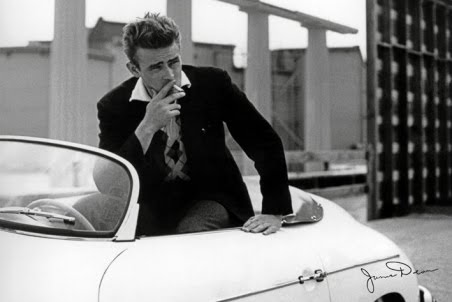
Had James Dean the superstar actor survived a horrific car crash in 1955 he would be 75 years young, or there abouts . . . have I unknowingly shared some common ground down the years with Dean over his choice of wheels . . .

James Dean loved speed — and so do I, I must confess. It seems to go with my part-time job of being a motoring journalist, I suppose. During Dean’s short lifespan of 24 years — before his meteoric career as a film actor came to an abrupt end when he was killed in a fiery car accident — he had managed to experience — as I did — the art of motorcycling via a Triumph Tiger 100 but soon made the logical jump to sports cars when he bought himself a red MG TD Roadster in 1954. (I no longer have motorcycles, but only recently got rid of my red MG TD, but that's another story!)

Alas, for Dean, the MG wasn’t fast enough and being quite a useful club racer, usually finishing in the top five places, decided a Porsche 356 was the car to take him to the top of the winner’s rostrum, and so it was — for a while. The appreciative crowds at Santa Barbara, Palm Springs and Bakersfield — circuits as well known in California as would have been our very own Roy Hesketh, Woodmead and Killarney are to South Africans — loved the good-looking star of “East of Eden,” a film that had set Dean’s acting career alight.

Back to Dean’s motor racing career and again his car was losing out to the opposition . . . it was time to find something really quick this time around. A Lotus 9 racer was seriously considered but the delivery time remained uncertain. A Morgan Plus Four (a car I also owned, but that’s worthy of yet another story) wasn’t rated rapid enough for Dean.

A phone call from a sports car dealer called Competition Motors in Hollywood, and on the advice of his motor mechanic and friend Rolf Wutherich, Dean fell in love with a Porsche 550 Spyder — chassis number 550-0055. This was one of a handful of Porsches earmarked for the American market that year — a car Dean was to own — but never race — just a few days before he met his untimely end.

Because of his yearn for speed, his studio executives had placed a ban on his racing exploits until another blockbuster movie was safely on celluloid — the title of the fim: “Rebel Without a Cause”. If he wasn’t famous already, he certainly was now!

On September 21, 1955 — two weeks before “Rebel Without a Cause” was released to theatres across America Dean took delivery of the $6,090 Spyder — quite a sizeable amount of money for a car back then. Mind you, it easily outperformed the 356 by offering 40 more horses and a top speed of 135 mph. This little car — nicknamed by Dean’s friends “Little Bastard,” seemed, somehow, to have a mind of its own . . .

Just before 6 pm on September 30, Dean and Wucherich in the Porsche Spyder crossed an intersection near the town of Cholame on Route 41 when, on their way to their first race collided with a big, solid Ford Custom coupĂ©  . . . well you know the rest.

Amazingly Wucherich and the Ford driver, Donald Turnupseed survived the crash, but not Dean. He was pronounced dead where he lay. The battered aluminium coachwork of the Spyder was past salvaging but many of the mechanical parts were sold on.

Legend has it that parts fitted to other 550s were somehow tainted with death, and it’s reliably documented that at least one race driver, a Dr Troy McHenry, lost his own life just 12 months later when driving his own 550 Spyder, ran into the only tree at the Pomona race circuit. Cause of the accident: a steering component — a part believed bought cheaply from Dean’s wrecked car.

Was this the start of what was to become known as the Cholame Curse? A car enthusiast George Barris, bought what was left of the wreck but the car slipped off the tow truck breaking both his legs while being unloaded. The malevolent Spyder seemed to be evil. When Barris broke the car up for spares he sold two rims and tyres only to learn both tyres had blown simultaneously sending the competitor into a wild spin and missing death by inches.

Barris loaned the wreckage to the California Highway Patrol for a display and later learned the garage where the car was stored had been burned to the ground along with several squad cars . . . but not “Little Bastard!” Many years later in 1983 and 1985 it seems the fans still hadn’t forgotten James Dean. His headstone was twice replaced after mysterious removal. What happened to the car, you might ask. Well, in 1960 another road safety show took place in Miami, Florida.

The remains of the car were loaded onto a tow truck after the event only to disappear en route to Los Angeles. “Little Bastard” was never heard of again. 

Wednesday, April 21, 2010

Driven to distraction!


Mr Bean might seem an unlikely candidate to be a dieselhead and worthy of these columns — but in real life he really is. After tracking down one of his Minis in a car museum, reputedly diesel-powered, DAVE FALL just had to find out more about the incredible duo . . .

Success comes easily to Mr Bean (alias Rowan Atkinson) it seems. Every time he makes a full-length movie he buys himself another sports car. Reputed to be worth £80 million, he has just splashed out £500,000 on a classic D-Type Jaguar to stand alongside his collection of Bentleys, Aston Martins et al.

When he made the original Mr Bean movie he bought himself a £650,000 McLaren F1 supercar that he promptly drove into the back of a Rover Metro that was driven by a little old lady on the Lancashire bypass! She was fine — he was fine, the Rover was OK but the McLaren needed an expensive rebuild.

Atkinson’s brother Rodney reckons: “Rowan, whose Mr Bean character drives a Mini rather than a high-powered super car, is an “absolute fanatic” about wheels — even better if powered up by diesel fuel. The faster they are the more he likes them. He’s a very good driver, there’s little doubt about that —and to my knowledge this is the first accident Rowan has ever had.”

Rowan (52) and father of two young children, takes his hobby seriously it seems. British Car magazine used his services for some time and even gave him his own column, such was the success of the Mr Bean TV series, and of course the collection of Minis he used. In the early shows he had an orange 1969 Morris Mini MkII (RNT996H). This car met an early demise — no, not Mr Bean’s fault this time!

In a series of 14 half-hour Mr Bean shows he went through four cars — another was totally flattened by an army Chieftain tank — the one that accompanies this article survives thanks to the National Car Museum down at Beaulieu, along with other celebrity cars such as another British TV favourite, the Trotter’s (from Peckham) three-wheeler Reliant.

Mr Bean and his Mini were often featured in conflict with a blue Reliant Regal that usually got tipped over, bumped out of a parking space, or crashed into, to become something of an on-going joke throughout the series. Three-wheelers rarely made their way to South Africa for obvious reasons, but Natal readers may remember local motorsport personality Colin Dove from Mayor’s Walk Service Station in Pietermaritzburg who owned a Bond three-wheeler . . . I wonder what happened to that car after Colin shuffled off this mortal coil?

Bean rarely spoke on any of his shows — except mumbling to his Teddy, of course. A dark-brown, knitted oddity with buttons for eyes and bloated limbs, he too often ended up broken or in various states of destruction. Several “Teddy’s” graced the show as well, it seems.

Ever wondered about Bean’s girlfriend that occasionally appeared on the show? Her stage name was Irma Gobb — real name Matilda Ziegler. Usually treated more as a friend than a companion she always seemed to come up short when invited for dinner or taken to a dance.

Atkinson (Bean) has a Phd at Oxford, in English, I believe. An unusual aside to the comedy show was the choral performances that appeared before, during and after most episodes. Sung at the beginning by the Choir of Southwark Cathedral (later Christ Church Cathedral, Oxford) was Ecce homo qui faba (Behold the man who is bean); Pars secunda — Part II (sung after any commercial breaks); Finis parties primae — End of Part One (sung before the commercial break) and Vale homo qui est faba — Farewell, man who is a bean).

Did Bean unwittingly reveal the secret of securing your car in this shows? In Mr Bean Rides Again he hid the ignition key under the car bonnet, the key for the bonnet was kept in the boot, the key for the boot was attached to the sun visor above the driver, and the key to the car door that was heavily bolted was kept on his person!

Are you wondering where Mr Bean, alias Blackaddder and the main actor in The Thin Blue Line will spring from next? He’s reportedly about to star in a new movie version of David Copperfield as Mr Micawber, one of Charles Dickens’ best-known comic features . . . can’t wait for that one!


Friday, April 2, 2010

Setting the record straight


I decided to delve into his car history books to find out who made the shortest, cheapest, costliest, longest, oldest, fastest, the heaviest and the lightest vehicles around.

Don't you hate it when people tell you something and you know darn well they are wrong! It happens to me occasionally so I’ve taken time out to discover some weird and wacky facts in motoring through the ages.

The costliest car ever made is not a current offering from Mercedes that goes by the name of Maybach, but rather NASA’s Lunar Roving Vehicle. Four were built in 1971 at a total cost of £19 million. At £79,000 the McLaren F1 supercar seems cheap(ish) at £799,000, though.

The longest production passenger car ever made appears to be the 15-seater Checker Aerobus at 6,850mm in length. Built in the 60s, it had eight doors. The car with the biggest bonnet is undoubtedly the Bugatti Royale, built in 1930. I’m not sure of the length but it had to accommodate an engine of 12,763cc capacity! The longest road-going two-seater is said to be a special-bodied Rolls-Royce Silver Cloud that was built for the 1957 British Motor Show. It was nicknamed the “Honeymoon Express” for some reason.

The shortest car ever made, meanwhile, is the Peel P50, an upright single-seater, three-wheeled bubble car measuring just 1,350mm in length. It was built between 1962 and 1966 in the UK. The idea behind the original Mini was to create the shortest car to carry four people and their luggage. It was 3,050m in length. Designed by Sir Alec Issigonis, he then asked the mechanical boys to design an engine to fit his car! The shortest car made after 1966 was the simply dreadful 1982 Cadillac Cimarron. It was based on the Vauxhall Cavalier.

The fastest car category will most likely be the most interesting to readers. Yes, there is now the Bugatti Veyron but for a number of years the McLaren F1 proved to be the fastest road car at a phenomenal 384 km/h. And that from a car that didn’t even have ABS brakes! However, Ferrari’s F40 and Lamborghini’s Diablo are also claimed to go faster than 320 km/h.

In 1903 Britain still had a national speed limit of 19 km/h. Times must have been tough at the turn of the 20th century because the slowest car ever put into production was the Rytecraft Scootacar in the 30’s. Creeping along flat-out at 24 km/h, that also happens to be the top speed of the infamous Sinclair C5 in 1985. French car company Citroen can lay claim to the slowest four-wheeler, four-stroke car. Its 2CV engine had a top speed of 64 km/h, and that from a 6,75kW motor.

But it wasn’t all doom and gloom. Power-steering was first seen on a car (Chrysler Imperial) in 1951, while the first anti-lock braking system (ABS) recorded on a production car was fitted to a Jensen FF. 1940 saw air-conditioning fitted — again American — this time in the Packard Super Eight. Meanwhile, the first turbo was fitted to an Oldsmobile Jetfire. Across the Atlantic, it was 1976 before British motorists were able to benefit — and only if you could afford a TVR3000M. Daimler were the first car company to offer a wireless (modern day sound system)  — that was back in 1922. Twelve years later Hillman offered them as standard fare in the “Melody Minx.”

The oldest marque question often turns up at “pub nights” so listen up: Daimler is the world’s oldest marque, having been in existence since 1896. AC can lay claim to being the oldest independent car firm, though (remember, Daimler is now Ford property). AC was founded in 1901, although it has had spells during that time when production was suspended. Apart from the basic profile, today’s Land Rover 90 shares nothing with the first models of 1948.

We now come to the heaviest — and lightest — until well into the 1930s, individual coachbuilt cars were popular. Larger examples would have included the 8,0-litre Maybach Zeppelin saloon and the Duesenberg Model J 6,9-litre sedan. Interestingly, the powerful aluminium 3,5-litre V8 Rover engine, as fitted to the 1973 MGB GT V8, weighed in at an astonishing 18 kg less than the normal iron 1,8-litre four-cylinder lump the MGB was usually fitted with.

To save weight, Lawrie Bond, designer of the 1948 Bond Minicar, even left suspension out of his tiny 197cc three-wheeler. The seat pads and tyres providing all the cushioning your mother-in-law needed!